The Moneyball Gazette The Blog
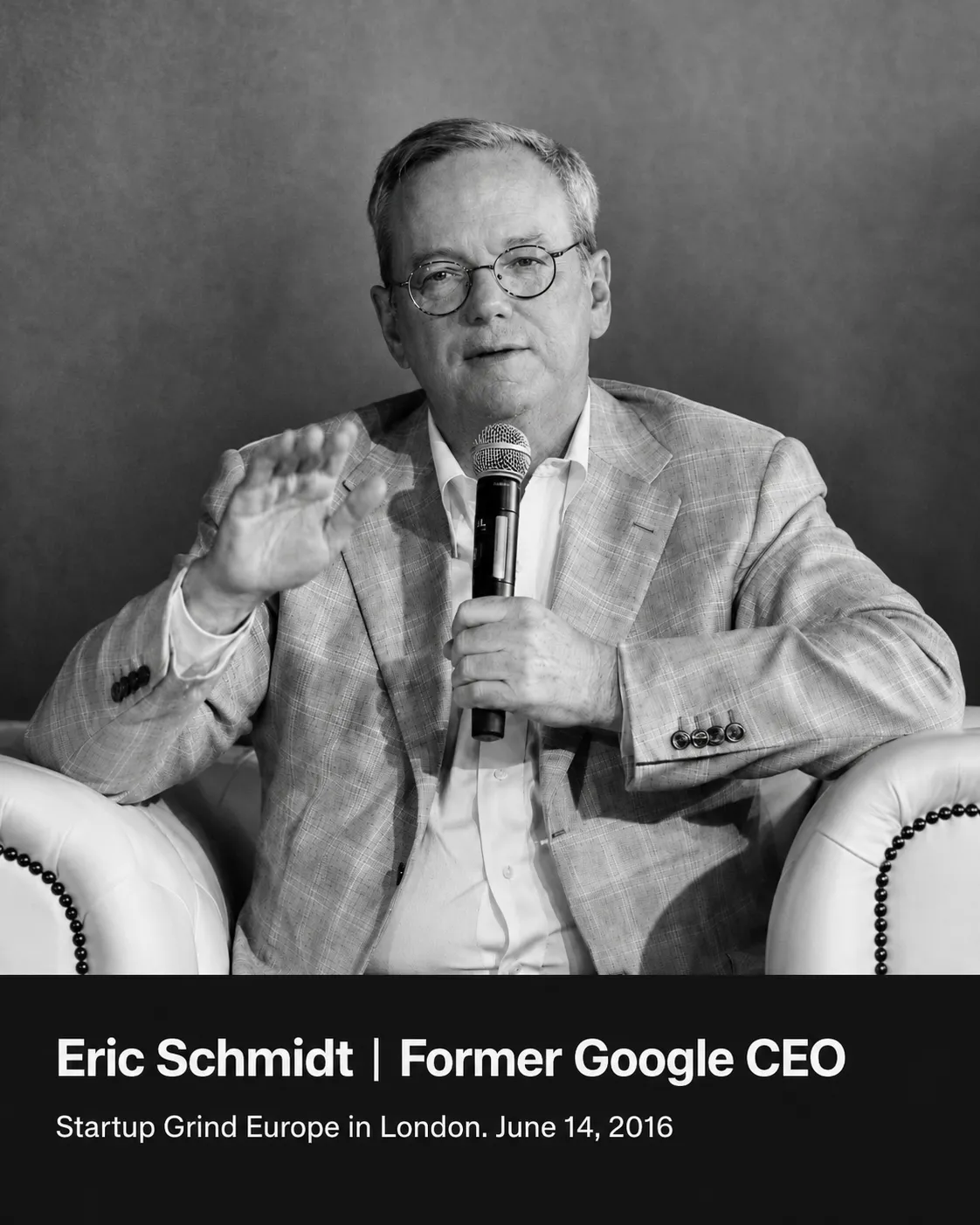
Eric Schmidt Endorses Moneyball.win
The former Google CEO explains the platform strategy we are running: give the product away, let users teach the system, and win the market.
By John Fox
FREE is the new winning platform pricing model in the age of computing and AI costs racing to zero. It is our GTM Strategy. We’ll meet you in the marketplace.
Section I
Transcript from Eric
One of the reasons why our industry is so tough is that just when you sort of figured it out, the rules change again. So I’ll give you a simple example.
I you went to business school and I didn’t, but I teach at business school, you would have been taught: Build a great product, organize a salesforce (you know you and I talked about this in my previous roles), sell it to the customer, charge a fair price, make the customer happy.
Seems like that’s what business is about, right?
That strategy is insufficiently scalable in a global market that’s all interconnected. So in other words, it sounds like a fine strategy and it’ll produce a reasonable business, but it’s not going to produce a huge business. It’s just too hard to hire all those salespeople, working with every customer and so forth. You have to have a more clever strategy.
So I can give you examples but all of the really big companies have invented a new way to access information or a new way to do something that didn’t require that full cycle and all the time that is required.
Many ideas I hear don’t require that full cycle and all the time that is usually needed. So many, many people talk to me about their new ideas — and I’m sure there are many of them represented here in the room. The problem is, they’re good… but they’re not good enough.
The specific question I would ask is: Do a plan over the next five years. I always like to do five-year plans and try to figure out what your growth route will be like, and then try to figure out what a more scalable strategy would be.
Give it away? Yes! And it’s been done before.
Editor’s note: It has indeed. See Jack Bolt, the Godfather of Open Source.
A typical example: Somebody will build some interesting app that they want to charge $10 for. And so I will ask, “Well, why couldn’t you give the app away for free and then upsell the users?” Everybody here understands that strategy.
Let me give you another example. I’m quite convinced I know what the platforms will look like in five years. I can’t tell you what the great companies will be like, but I’ll describe it.
Five years ago, I said publicly that the future would be apps on smartphones that use Google Maps, GPS, and do something useful. Now, what I should have said was Uber. But I wasn’t smart enough to say that what people actually want is a personal transportation system. That was up to Travis and his co-founder to invent in Paris when they were visiting.
So what do I think we’ll be talking about five years from now? I think we’ll be talking about systems that use Android and iOS, fast networks, and powerful machine learning. But they’re going to do something else: they’re going to use the crowd to learn something.
I’ll give you a trivial example. I know nothing about dermatology, and I have a million dollars. So what I’m going to do is run around to dermatologists and pay them $1 to categorize skin samples with whatever the dermatological problem is. I’ll put that into my machine learning system, run it through the system, have it do a series categorizations, and then I’m going to go and sell the same service back to dermatologists — because my system will be more accurate than any individual dermatological diagnosis.
That model — which is you crowdsource information in, you learn it, and then you sell it — is, in my view, a highly likely candidate for the next $100 billion corporations. I’m not suggesting that it’ll be Alphabet or Uber or Facebook, but if I were starting a company, I would start with that premise today.
KEY POINT: How can I use this concept of scalability to get my users to teach me? So if your users teach me, and then I can sell to them — or to others — a service which is better than their own knowledge, it’s a win for everybody.